 |
Jalindobhaka ni ndoto ali njumu ginehe (Sukuma)
Zinawaka zilizombish, itakuwaje kwa zile kavu (Swahili)
Ils s’apprêtent à brûler le bois de chauffage frais (humide); qu’adviendra-t-il alors du bois sec (French)
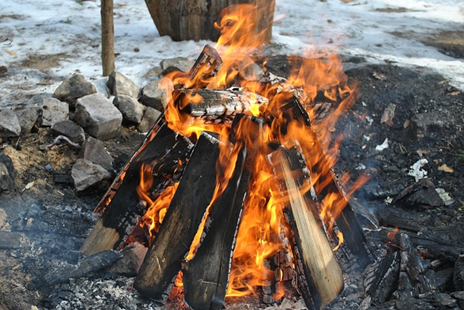
They are about to burn the fresh (wet) firewood, what will happen to the dry ones |
Sukuma (Tanzania) Proverb
Background, Meaning and Everyday Use
The Sukuma Ethnic Group in Tanzania uses various proverbs in teaching their societal members enough to make sure that their message is clearly understood. One of those proverbs says, “they are about to burn the fresh (wet) firewood, what will happen to the dry ones.” This Sukuma proverb uses a vivid image from everyday rural life of the burning of firewood. When the fresh (wet) firewood begins to catch fire, everyone knows that the dry firewood will burn even more quickly and fiercely.
In this context, the proverb teaches people about inevitable consequences and the seriousness of coming judgment or hardship. It serves as a warning or lesson in foresight.
If those who are seemingly strong, safe or innocent are facing trouble, what should those in a weaker or guiltier position expect? In daily conversation, the proverb is used when something bad happens to respected people or leaders in order to warn others to be cautious. It emphasizes that when punishment or misfortune reaches even the powerful, the less powerful should be even more careful.
This proverb works as a reminder that everyone is subject to justice, correction, and accountability; no one is exempted. In addition, it carries a tone of moral reflection by urging human beings to repent, prepare and act wisely before it is too late. This Sukuma wisdom closely mirrors teachings that are found in scripture particularly Jesus’ own words and the messages of the prophets and apostles about divine justice.
Biblical Parallels
Luke 23:31: “For if they do these things when the wood is green, what will happen when it is dry?”
1 Peter 4:17: “For the time has come for judgment to begin with the household of God; and if it begins with us, what will be the end of those who do not obey the gospel of God?”
Proverbs 29:1: “Whoever remains stiff-necked after many rebukes will suddenly be destroyed without remedy.”

Contemporary Use And Religious Application
In today’s world, this proverb offers a moral and spiritual reflection for communities and individuals alike.
In community life: It reminds leaders, families, and believers that if wrongdoing or moral decay brings suffering even to the respected or powerful, others must take heed and change their ways as soon as possible.
In pastoral teaching: Preachers and catechists can use this proverb to illustrate the importance of conversion, humility, and vigilance in faith. It urges the faithful to reflect on their lives and avoid complacency.
In personal spirituality: It challenges each believer to be alert and ready for trials, repentance, and God’s call. If even the righteous face purification, how much more should the careless prepare their hearts?
Therefore, the Sukuma people teach each other by saying they are about to burn the fresh (wet) firewood, what will happen to the dry ones. This is to remind one another that life’s “fire” trials, justice or divine correction spares no one. If even the fresh wood begins to burn, the dry wood cannot escape. It calls all people to wisdom, repentance and renewal of faith, trusting in God’s mercy and striving to live uprightly before the day of testing comes.
Text by Justina Deus
Box 71
Kishapu , Tanzania
Cellphone: +255710058590.
Photos by:
Rev. Zakaria Kashinje, OSA.
Dar es Salaam, Tanzania
Cellphones:
+255-756-887787 Vodacom
+255-717-3337787 Tigo
+255-786-337787 Airtel
Email: zkashinje@gmail.com
zkashinje@yahoo.co.uk
Related Posts
- October, 2003 Proverb: “The hen with baby chicks doesn’t swallow the worm.” – Sukuma (Tanzania)
- October 2026 African Proverb of the Month Even if the back of the head grows, it will never pierce through the hat. Sukuma (Tanzania) Proverb
- October 2022 African Proverb of the Month One hand does not raise a child. Sukuma (Tanzania) Proverb
- October 2021 African Proverb of the MonthThe monitor lizard has stuck on a rock. Sukuma (Tanzania) Proverb
- October 2019, Even an elephant, that is, an important person, can be sent. Sukuma (Tanzania) Proverb
- October 2018, The salesperson (seller or merchant) does not have only one door. Sukuma (Tanzania) Proverb
- November, 2020 To lose the way is to find the way. Sukuma (Tanzania) Proverb
- May 2010: “Tomorrow makes known to us what tomorrow will bring” – Sukuma (Tanzania) Proverb
- March, 2015 A good person (goes to God) with his or her clothes?” … “Potato.” Sukuma (Tanzania) Riddle
- Mar. 2012: “Look up, Tungu my child.” ~ Sukuma (Tanzania) Proverb
- June, 2024 African Proverb of the Month If you have someone leading you, you cannot lose the way. Sukuma (Tanzania Proverb)
- June, 2023 African Proverb of the MonthLearning has no end. Sukuma (Tanzania) Proverb
- June, 2017 There is no rush. Take it easy. Sukuma (Tanzania) Saying
- June 2020, Goat droppings (that later become manure) are mainly found in a loafing shed (barn). Sukuma (Tanzania) Proverb
- June 2019, An elephant is not overwhelmed by its trunk. Sukuma (Tanzania) Proverb
- Jun. 2004 Proverb: “Hot water does not burn down the house.” – Swahili (Eastern and Central Africa)
- Jun. 1998: “I pointed out to you the stars (the moon) and all you saw was the tip of my finger.” – Sukuma (Tanzania) Proverb
- July, 2021 African Proverb of the MonthThe way is in the mouth.Sukuma (Tanzania) Proverb
- Jul. 2000 Proverb: ” Do not insult the hunting guide before the sun has set.” – Sukuma (Tanzania)
- January, 2020 Although he is materially poor, at his house was found a housefly cord. Sukuma (Tanzania) Proverb
- January 2023 African Proverb of the Month A nice potato is never peeled Sukuma (Tanzania) Proverb
- January 2018 To make marks on the trees. Sukuma (Tanzania) Proverb/Story
- Jan. 2008: “I have been bitten by a tsetse fly.” – Sukuma (Tanzania) Proverb
- Jan. 2007: “Two ants do not fail to pull one grasshopper.” – Haya (Tanzania) Proverb
- February, 2024 African Proverb of the MonthCome back child.Sukuma (Tanzania) Proverb
- February, 2022 African Proverb of the MonthThe one who leads (usually in a herd of cattle) drinks clean and clear water. Sukuma (Tanzania) Proverb
- February-March, 2021 The pursuit of grasshoppers is done in the morning. Sukuma (Tanzania) Proverb
- February 2026 African Proverb of the Month You have fled from the rain, can you flee from the dew too? (Sukuma) Proverb
- February 2025 African Proverb of the Month Having white hair is a broom Sukuma (Tanzania) Proverb
- February 2023 African Proverb of the Month Stumbling is not falling but going forward. Sukuma (Tanzania) Proverb
- February 2019, The medicine for a rising river is to go back. Sukuma (Tanzania) Proverb
- February 2014 – The hoes of two people cultivating together in a field sometimes clash (hit) against each other. Sukuma (Tanzania) Proverb
- February 2013 – As soon as you experience hunger pangs (feel hungry) why do you always want to eat? Sukuma (Tanzania) Proverb
- December, 2023 African Proverb of the MonthMiss a target when hunting, rather than marry the wrong woman.Sukuma (Tanzania) Proverb
- December, 2021 African Proverb of the MonthThe ant tried/made an effort to eat the rock (stone).Sukuma (Tanzania) Proverb
- August, 2023 African Proverb of the MonthToday is today whoever says tomorrow is a liarSukuma (Tanzania) Proverb
- August 2025 African Proverb of the Month The rhinoceros that has babies is not bitten on her legs. Sukuma (Tanzania) Proverb
- August 2022 African Proverb of the Month Many pieces of firewood light the whole night.Sukuma (Tanzania) Proverb
- April 2026 African Proverb of the Month It flashes, it will rain Sukuma (Tanzania) Proverb
- April 2025 African Proverb of the Month If it is not broken don’t fix it. Sukuma (Tanzania) Proverb
- April 2023 African Proverb of the Month The grinder of sorghum sings to comfort herself . Sukuma (Tanzania) Proverb
- April 2022 African Riddle/Story of the Month“I have a riddle.” “Let it come.” A person went to the coast naked and came back/returned fully clothed?… groundnut/peanut.Sukuma (Tanzania) Riddle/Story
- Apr. 2011: “To stay a long time in the water does not make you clean.” – Sukuma (Tanzania) Proverb