![Sep. 1998: “It [a bug] grows up in dry wood, and yet comes to maturity.” – Gikuyu (Kenya) Proverb](https://afriprov.org/wp-content/uploads/2020/02/logotrans.png)
 |
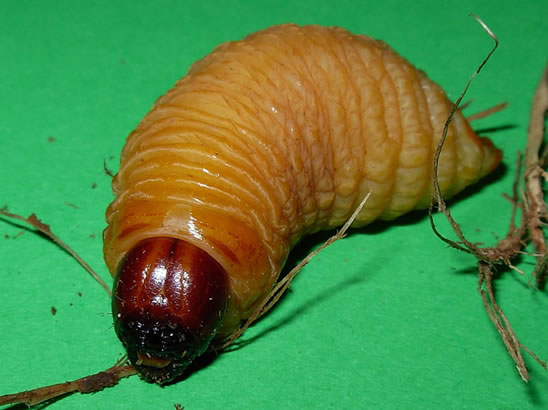
Iireragira ruku-ini ni ikaya kuigana. It [a bug] grows up in dry wood, and yet comes to maturity. |
Gikuyu (Kenya) Proverb
Explanation:
There is a type of insect or bug which is found in dry wood. This insect is so thin and pale that you can easily mistake it for a splinter of wood. Except for its movements, you would not know that it is alive. It makes one wonder what it feeds on inside the dry wood. Whatever it feeds on must be something very tiny, and yet it is able to sustain itself. It is as a result of observing this bug that the Gikuyu came up with the above proverb.
This proverb is teaching us that we do not need much in the way of material things to grow and to sustain our life. In modern times the truth of this proverb is illustrated by children from poor families, and especially street children, who are born and raised under very difficult conditions, and yet attain maturity and state of health comparable to those of the rich.
 There are two applications of this proverb for modern times, a secular and a religious one. At the secular level, this proverb is calling for voluntary simplicity on the part of individuals and nations which indulge in overconsumption without any thought whether they are leaving anything for others, especially now that resources are getting more and more scarce. These individuals and nations should heed the words of Mahatma Gandhi to the effect that the resources of the earth are enough for everyone’s needs, but not for everyone,s greed. Likewise, they should listen to Buddha when he says that man’s happiness is inverse proportion to the multiplication of material possessions.
At the religious (Christian) level, we have the words of Jesus regarding the birds of the air which do not sow or gather into barns and yet God the Father feeds them adequately (Matthew 6:26). If this is so, why should humans–who are more precious than the birds of the air–fret as to what they will eat, drink, or wear? Here Jesus is teaching us that we ought to put our trust in God rather than in material things. The overall import of this proverb is that proper development ought to take into consideration not only modern science and technology, but also other humanistic values, especially traditional wisdom.
Dr. Gerald Wanjohi
Nairobi, Kenya
E Mail: gwanjohi@thorntree.com