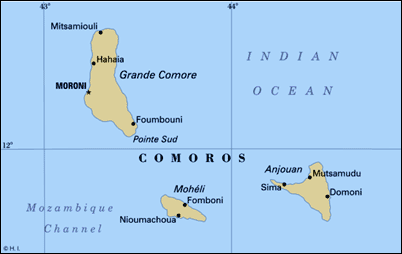
Map of Comoros
| Orbis Books Edition (Maryknoll, NY USA): Ostriches, Dung Beetles, and Other Spiritual Masters: A Book of Wisdom from the Wild by Janice McLaughlin Published by Orbis Books 2009, 148 pages Price: $18.00 (USD) Silveira House Edition (Harare, Zimbabwe): |
![]() |
Reviewed by Oskar Wermter, S.J.
WHAT BAOBABS AND BEETLES CAN TEACH YOU
African fables present human characters in the form of animals: little Hare is physically weak, but clever and full of tricks. Elephant is huge and has enormous strength, but seems a little weak in the head.
Sister Janice McLaughlin, a well-known Maryknoll Sister associated with Africa for 40 years, loves the continent, its people and animals, trees and plants. In this little book she sums up the wisdom she has gained from and in Africa, which turned out to be her farewell gift, since she was elected to the leadership team of her religious congregation and had to leave for her native America.
Every chapter is devoted to an African animal or plant, symbol of a particular virtue (maybe life skill would be a more trendy expression). There is the humble dung beetle who stands for endurance. The dung beetle never gives up and failure never discourages it. “Zimbabweans are experts in persevering”(15). This was shown during sanctions and especially during the war of liberation to which Sister Janice refers often since she lived through it side by side with the fighters in the camps in Mozambique. Perseverance is needed once more in this present time as Zimbabweans are under pressure again, “this time from its own government”. She reminds us of the perseverance of Mother Teresa of Calcutta and her “dark night of the soul” alongside Nelson Mandela’s perseverance in 27 years of imprisonment.
And she throws in some bits and pieces of her own wisdom, very apt at this very moment, “Change does not happen by accident. Improvements don’t come overnight. If we want to make a difference in the world, we must be prepared to work hard and long….like the dung beetle we must be prepared to try again and again until we succeed” (16/17).
This presentation, which contains also memories of her childhood, her years as a religious woman, missionary and development worker, is followed by short quotes from Scripture and some reflections and questions, concluding with calls for action. Her didactic approach shows her as a wonderful teacher who clearly loves her message as well as her pupils, patiently trying so many different ways to get just one simple message across.
Youth groups and Christian communities and associations of any kind should make use of this little book full of wisdom, animal and human. Though written in English, it often refers to Shona expressions and sayings, and its humour makes it very attractive. Why not read and discuss one chapter per week? You will end up as humble and self-accepting as the hippo and learn how to manage conflict just as the weaver bird does!
Sister Janice McLaughlin MM worked in Kenya in communication before she was asked in 1978 to work for the Catholic Commission for Justice and Peace in Rhodesia. After a short time she found herself in prison. After her deportation she went to work for Zimbabwean refugees in Mozambique. In recent years she was working in leadership training at Silveira House. She is the author of On the Frontline – Catholic Missions in Zimbabwe’s Liberation War, Baobab Books, 1996, 351 pages.
This review was originally published in Mukai Vukani, No. 48, May 2009.
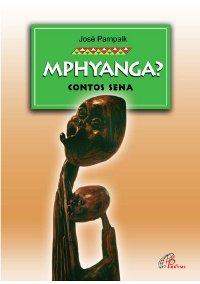
Book Review of MPHYANGA? Contos Sena – Leadership, Participative Development and Empowerment of Women
No. 2 in the “Sabedoria do Povo, Hoje” Series
Compiled and presented by Joseph Pampalk
Published by Paulinas, Maputo, Mozambique, 2008
ISBN 978-9966-08-341-8
Paperback, 395 pages
Price: Euro 9.5
Reviewed by Maria Decarli, DSP
After a Second Edition of Nzerumbawiri – Provérbios Sena was recently published with a total of 652 Sena Proverbs (containing 227 new proverbs), this new collection of 55 Sena stories in Mozambique by the same author is very rich in its cultural and social value. The approximately one million Asena people live in the central provinces of Mozambique especially in Sofala, Manica e Tete, and Zambesia. “MPHYANGA?” means “is it mine?” and takes this name from the first story.
The author has in mind, through the different contents of the stories collected during many years after a great sense of listening and respect for the traditional oral literature and wisdom, to challenge the reader to reflect about these main questions and topics: human responsibility and participation of diversities to create the sense of national unity in communitarian development; how to overcome suffering and poverty; how to exercise public service; how to integrate diversity into the same dignity; how to transform what is negative in our society into positive occasions of growth; how to rebuild social cells in crises; how to live and work together as men and women without prejudices; how to educate children; and then as a conclusion: how to continue to build our own identity.
The thematic index at the beginning is very useful to give a quick overview and to orient the reader to choose a particular story related to this or that social topic that is conducive to group reflection and discussion: For example: The first story “O Passarinho Timba” (Portuguese for “The Small Sparrow”) that is “Timba-Nkhalamu” in Sena is about a small bird that wants to become big like a lion. After reading the story we can ask ourselves: Is what is described in this story still happening today? How and why and where? How can we overcome that? Certainly this work will offer a good contribution to keep the value of the traditional oral literature and wisdom which can be understood and become dynamic in the world of today and to offer a key to read our reality and to become critical of, and responsible for, the changes in our society.
In the book the Sena text of the stories is printed after the Portuguese version. In some cases the original story is taken from Ronga language or quoted from another language of Mozambique.
This book will be of interest not only for Mozambicans and Africans, but for many other people since the comments of the stories in the last part of the book will captivate them to better understand their hidden value.
To order a copy of Mphyanga? – Contos Sena contact:
Paulinas – Livraria e Audiovisuais
Av. Eduardo Mondlane, 1536
Maputo, Mozambique
Email: paulinas@tvcabo.co.mz
Paulinas – Centro Multimédia – Evangelização e Cultura
Rua Rey Katyavala, 162
Luanda, Angola
Email: paulinas.ang@ebonet.net
Paulines Publications Africa
P. O. Box 49026
00100 Nairobi, Kenya
Cellphone: 0720-476934
E-mail: publications@paulinesafrica.org
Sister Maria Decarli, DSP
Daughters of St. Paul
P.O. Box 49026
00100 Nairobi, Kenya
Tel. 4442319
E-mail: mariadecarli3@gmail.com
Sister Maria Decarli, DSP is the Director of Paulines Audiovisuals Africa based in Nairobi, Kenya.
BASSA PROVERBS FOR PREACHING AND TEACHING
By Abba Karnga
Asempa Publishers
Christian Council of Ghana
Box 919, Accra.
SAY YOU’RE ONE OF THEM
AUTHOR — UWEM AKPAN
PUBLISHED BY LITTLE BROWN & COMPANY, USA AND LONDON
DATE OF PUBLICATION — JUNE 2008
359 PAGES
PRICE — USA $23.99 and KENYA SHILLINGS 1,090
Oprah Winfrey’s Book Club 2009 Selection, Click HERE to order your copy from Amazon.com
REVIEWED BY JOSEPH ADERO NGALA
They came in — one, two — and then suddenly the numbers swelled. It was Saturday at the Hekima College, a Jesuit theological college situated on Ngong Road just to adjacent to one of the biggest slums in the world Kibera. Saturday is not a good day in Nairobi, Kenya. Many people have busy schedules visiting relatives, weddings and baptisms and many other activities.
People came in big numbers just to listen to the Nigerian writer and once a student at Hekima College –now Father Uwem Akpan, SJ. He was giving a talk on his new book Say You’re One of Them. Akpan is a short man and has a personable smile. He wears Nigeria attire and jokes a lot. He is a wonderful writer who writes imaginative stories — ones that will not get him into trouble with Rome because in fiction there is no Imprimaturs (that simply means that the bishop has given it a clearance whether he agrees with the contents or not).
During his presentation Monica Arac de Nyeko who was the moderating the talk commended Father Uwem for a well-done job. The idea of the book started while Uwem was a student at Hekima and he wrote most of the stories at night while using the community computer that had viruses and ate much of his work. He told a story of a fellow young Jesuit who is also my nephew — Father Elias Omondi — who was then working with refugees in Ngara, Northwestern Tanzania in the diocese of Rulenge. Uwem asked him what the situation was like with Rwandese refugees after the genocide. Father Omondi simply replied: ”It’s madness; even psychologists are traumatized so that they have to leave”.
Uwem sees the lens of his writing through the eyes of African children. His writing is more photographic eyes — he narrates what he sees and tries to put it into fiction. Father Agbonkhianmeghe Orabator a fellow Nigerian Jesuit who is the Rector of Hekima College wrote recently in an invitation letter describing Uwem as a writer who is present in the strife-ridden continent of Africa through the heartrending and stunning narratives of children in Kenya, Benin, Ethiopia, Nigeria and Rwanda. Orabator says Akpan shares his ideas about the role of religion in redeeming Africa from the perils of poverty.
When was asked why he writes only about children, Father Uwem’s answer was simple. ”I was inspired to write by the people who sit around my village and share palm wine after Sunday Mass, by the Bible, and by the humor and the endurance of the poor”. He gave an example of when he was growing up: his mother told him folktales and got him and his brothers to read a lot. This is how he became a fiction writer during his seminary formation.
Father Peter Schineller wrote in America Magazine (which is Jesuit owned) that this acclaimed debuted collection of short stories by the Nigerian author Uwem gives readers a chance to see Africa through the eyes of its children.
It is not a pretty picture. A critic has praised the book, yet several have also written that they do not recommend it generally, but only for selected friends because of the brutality honest pictures it presents. One reviewer concluded that “Uwem reveals Africans pains, pity, joy and grace, and comes closer to the true modern Africa than the entire outpouring of the western mass media.”
There is a true story told about Uwem when he applied in 2004 to the graduate program in creative writing at the University of Michigan. His folder attracted a lot of attention. He was both a Nigerian and a Jesuit priest, and the program was not used to applicants from either of the categories. Father Uwem’s talents were abundantly evident, if a little raw. Eilleen Polack, the director of the program, recalled recently in an interview that there was some hesitation on the part of the admissions committee. “There were discussions about having a priest part of workshop where students would be writing about sex and drugs,” Ms Pollack said.
But in the end Father Uwem was admitted, and he endeared himself to everyone. Ms Pollack recalled his showing up on the first day of class wearing a University of Michigan sweatshirt. “Everyone loved him, “she said. “It turned out he had had more experience of the dark side of the world than all the other students put together”. Recently when I was reading the book Say You’re One of Them with my daughter Alicia Ngala, currently a Master students at Hekima International Peace Studies, she said that each of the book’s five stories is set in different country and each is told from the point of view of a child subjected to poverty, dislocation or worse.
One story is about a Kenya street family in which the breadwinner is a daughter who is a 12-year-old prostitute. The parents give their children glue to sniff because it is cheaper than food and dulls their hunger (however it would be interesting to note that these kids were in the street under president Daniel Arap Moi who ruled Kenya for 24 years in disarray).
In other stories in the book a young Rwanda girl watches her father (a Hutu) kill her mother because she was Tutsi. The collection’s title comes from this chapter entitled “My Parents Bedroom.” We can say that most of the stories are sad ones. The question one asks is where the road from Africa? Are they making progress or are they going back to the Stone Age?
The book brings many bad memories on the continent. The recent news coming from this region is very negative. Robert Mugabe is still hanging on in Zimbabwe and his people are starving to death and many children may not live and grow up to see their native land.
In Sudan President Omar Bashir now faces charges of genocide for his role in masterminding the horrors of Darfur, where 300,000 have been killed. In the Democratic Republic of Congo an estimated 5.4 million have died in the past 10 years, even though the civil war is said to have ended in 2003.
Somalia is ruled by warlords engaging in gang warfare. The Central Africa Republic has been called a phantom state — worse than a failed state. Fifteen Africans heads of state have been in power for more than 15 years, and 26 for more than 10 years. But positive news can be found as well. Among the 48 states of sub-Sahara Africa, the number with a free press and multiparty governance has risen to 11 from 3 in 1977 according to democracy advocacy groups. The number of nations in Africa considered not to have freedom for all has fallen to 14 from the 25 so listed a decade ago. Ghana, Liberia, Burundi, Tanzania, Mozambique and Botswana have all solidified democratic gains in recent years. There is also hope for the unity government of Ivory Coast with an election scheduled for November, 2008. Kenya, after several difficult months in which more than1,000 people were killed, has returned to a fragile peace.
The Nigerian born Jesuit priest Uwem simply transports the readers of his book into gritty scenes of chaos and fear in his rich debut collection. Uwem’s prose is beautiful and his stories are insightful and revealing, made even more harrowing because of all the horror seen through the eyes of children. With the growing canon of Africa writers what sets the stories of Uwem apart is that they come to us from the direct eye of the mad Africa continent faced with debts, religiosity, poverty, the venality of rules, and the desire for a better life. It has been said that if you want to know a place read its literature. These modern fables are reminiscent of Africa’s great writers such as Okot Bitek, Jared Angira, Dr Margaret Ogola, Yvonne Owour, Muthoni Garland, Wainaina Binyavanga, Wole Soyinka, Ismail Beah and Okello Oculli, just to mention a few.
Uwen Akpan is a Nigerian born in southern Nigeria. After studied in his home village until he was six and later joined secondary school before joining priesthood. After studying philosophy and English at Creighton and Gonzaga Universities, he studies theology for three years at Hekima College (the Catholic University of Eastern Africa).He was ordained a Jesuit priest in 2003 and received his MA in creative writing from a University of Michigan in 2006. He was short listed for the Caine Prize for African writing last year. In 2007 he began a teaching assignment in Harare, Zimbabwe. His writing fame was inspired by a young Kenya girl who used to attend his youth group in Guadalupe Church near Hekima College. The lady who is a banker now took his manuscript to Kwani Trust and by good grace the manuscript was published in Kwani magazine.
Joseph Ngala is the Director of People for Peace in Africa (PPA) in Nairobi, Kenya. This review originally was published in Colleagues Home & Abroad Regional News (PPA) on 9 September, 2008. Email: ppa@africaonline.co.ke