Categories
2008 African Proverbs of the Month

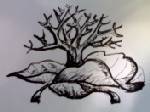
Dec. 2008: “When a leaf falls to the ground, the tree gets the blame/the shame goes to the tree.” – Nyanja (Mozambique, Zambia, Zimbabwe), Chewa (Malawi) Proverb

African Proverb of the Month
December 2008

Tsamba likagwa manyazi yagwira mtengo. (Nyanja and Chewa)

When a leaf falls to the ground, the tree gets the blame/the shame goes to the tree. (English)


Nyanja (Mozambique, Zambia, Zimbabwe) Proverb

Chewa (Malawi) Proverb


Background, Explanation, Meaning and Everyday Use


In African societies, particularly in rural areas south of the Sahara, family unity (a sense of belonging) and pride are strongly emphasized. Because the family unit is respected, members of that family will do all they can to ensure that the offspring are taught good manners and how to conduct themselves in society in order to bring honor to the family, respect for elders and members of the opposite sex, kindness, gentleness and so on. It is also not uncommon for the whole community to be a watchdog over the behavior and conduct of the young generation. Therefore when a young person (boy) commits an offence, say of disrespecting an older person, any older person can discipline that offender, even by whipping, without necessarily referring the matter to the parents. Even so, the person administering the punishment will still be obliged to report the matter to the parents who may also administer additional sanctions on the offender. The parents will thank the person who disciplined the boy and encourage him to continue being vigilant for the sake of good order and discipline in society.

So the meaning of this Zambia proverb is that the sins of the child are traced to the parents. This will be especially so in instances where the offence has a wider significance and brings shame on the family and community as a whole such as fornication, drug abuse and stealing. In such cases and others of similar significance, the shame touches both the family and the society in which the offender lives as if to say that they all failed to give the offender a morally upright upbringing. Hence Tsamba likagwa manyazi yagwira mtengo (“mtengo” being both the family and the community). Another proverb has a similar connotation: Nkhuyu zodya mwana zinapota amache meaning The figs that the child ate affect the mother. When the figs result in an upset stomach at night, it is the mother who has to escort the child to the pit latrine outside! 


Biblical Parallels 


Absalom, David’s son, was very beautiful to look at and had about him an air of authority and command. His father loved him and went out of his way to ensure that he provided for all his son’s needs. However, unlike Samuel, Absalom was ambitious, headstrong and wanted to set a parallel judicial system to his father’s (2 Samuel 15 – 19). At Absalom’s death David grieved sorely and so did the people.  The case of Abel and Cain is another. Then there is Noah and his two daughters. Dinah (Genesis 34); Amon and Tamah (2 Samuel 13); Samson (Judges 14 – 16); the Prodigal Son (Luke 15), etc.


Contemporary Use and Religious Application


When believers succumb to the devil’s wiles, it grieves God’s heart and Jesus and the angels cry in heaven. God sent his only begotten son to die for our sins so that we might have life abundantly. Our sins make the name of the Lord to be besmeared and denigrated. The damage is so grave that we should always ask for God’s grace to protect us from all evil, for us to live a sanctified life. 


Hector HL Banda

President, Zambian P.E.N. Centre

Lusaka, Zambia

Email: lanku2001@yahoo.com


Illustrations provided by:

Professor Cephas Yao Agbemenu
Department of Fine Arts
Kenyatta University
P.O. Box 43844
Nairobi, Kenya
Cellphone: 254-723-307-992
Email: cyagbemenu@yahoo.com

situs toto

Categories
2008 African Proverbs of the Month

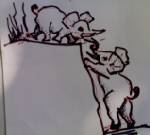
Nov. 2008: “It is only a male elephant that can save another one from a pit.” – Lega (Democratic Republic of the Congo – DRC) Proverb

African Proverb of the Month
November 2008

Balume babili ba ngyoku I ba uimanyanaka mu’mnyinga. (Lega)

Quand un éléphant male tombe dans un fossé, il n’est secouru que par un autre male.(French)

Tembo dume atumbukiapo ndani ya shimo ndefu, huokolewa tu na dume nyingine. (Swahili)

It is only a male elephant that can save another one from a pit. (English)


Lega (Democratic Republic of the Congo – DRC) Proverb


Background, Explanation, Meaning and Everyday Use

In central Africa, specifically in the Democratic Republic of the Congo (DRC), we find many big wild elephants. Being a hunting society, the Lega Ethnic Group community can easily kill other animals by trapping or shooting them with arrows or spears. That, however, was not possible when killing elephants. They therefore had to dig deep pits to trap them. When a young or female elephant got trapped, all the others could come to rescue the victim. But when it happened to a male elephant, only the males could rescue it because of their size and strength.

In Lega community, men were perceived to be strong in body and that is why they are the ones who were circumcised, who went hunting for food and defended the community in times of war — tasks that require lots of strength. In Lega land the women focused on maternity, household duties and other domestic tasks. When two different ethnic groups fought, sometimes it took the effort of another ethnic group to intervene by sending their wise men to bring reconciliation.

Biblical Parallels

The Ark of the Covenant was transported by men (see Exodus 25-29).

The variety and unity of gifts with the analogy of the human body (see I Corinthians 12).

Contemporary Use and Religious Application


Applied to human and social behaviour, this proverb illustrates how in Africa different activities are handled by different people in the community. Differentiation of roles brings more productivity and effectiveness in the local community. In most circumstances certain affairs especially activities requiring strength, can best be handled by men and not by women or minors.

All gifts come from God for the good of the community. This is the meaning behind the well known African proverb: It takes a whole village to raise a child. Each person has to know and use his or her gifts, but at the same time know one’s limits. Everything is done for the good of the community, not for personal entitlement.


Dr. Sim Kilosho Kabale
Senior Lecturer — Dept. of Foreign Languages
Kenyatta University
P.O. Box 43844
00100 Nairobi, Kenya
E-Mail: kiloshokabsim@yahoo.com


Illustrations provided by:

Professor Cephas Yao Agbemenu
Department of Fine Arts
Kenyatta University
P.O. Box 43844
Nairobi, Kenya
Cellphone: 254-723-307-992
Email: cyagbemenu@yahoo.com


situs toto

Categories
2008 African Proverbs of the Month

Oct. 2008: “A deaf ear is followed by death and an ear that listens is followed by blessings.” – Samburu (Kenya) Proverb

Nkore nkiyok natua norubare lkiye, naa nkore nkiyok naiichu nerubare nkichoni. (Samburu)

Sikio lisilosikia hufuatwa na mauti na sikio linalosikia hufuatwa na baraka. (Swahili)

A deaf ear is followed by death and an ear that listens is followed by blessings. (English)

Samburu (Kenya) Proverb


Background, Explanation, Meaning and Everyday Use

                The Samburu people are mainly pastoralists who live in the Samburu District and on the south and east shores of Lake Baringo, Baringo District, Rift Valley Province in Kenya. This Samburu proverb was used by elders to educate their youth against disobedience, especially the Morans (the youth) who can only be counseled by a counsel of elders. Also during peace meetings between communities where a disagreement had occurred, the council of elders will call a meeting between elders from both communities to try to look for the way forward in resolving the conflict. In the process of trying to persuade the other group or the youth to listen to them and settle the disagreement, elders used this proverb to warn those who do not listen that a listening ear is followed by blessing and a deaf ear is followed by death. This is an allegory that means that those who humble themselves and follow advice from elders will achieve fruitful results but those who don’t will be followed by wrath.

The proverb is commonly used during such times of conflicts among individuals and communities to warn stubborn figures that their resistance against values and norms of the community is dangerous. The community values humbleness as a tool to good living and peaceful co-existence between communities.

The proverb goes hand-in-hand with another Samburu proverb layieni-lai enchaaki enkiyok (in Swahili mwanangu nipe sikio lako) that means my child give me your ear (or listen to me). Both proverbs ask for patience and obedience to the elderly against unwanted acts by youths, like going to raid other communities especially to steal cattle. This will only bring loss of property, displacement, hunger and death in the community. A good historical example occurred when the Samburu were attacked by the Laikipia, a sub group of the Maasai community. Elders used this proverb in vain and during the fight 90% of the youth (Morans) in both communities were killed leading to many years of struggle to recover the loss. To date the Laikipia are very few and some are already absorbed in the Samburu community.

Another Samburu proverb is meatu nkang nacham larrabal (war is not good for anyone). Traditional Samburu items used in peacebuilding are white beads, cattle, stones, a special green tuft of grass and spittle. See the section on “Samburu” (pages 41-44) in Honey and Heifer Grasses, Milk and Water: A Heritage of Diversity in Reconciliation by many authors (Nairobi: Mennonite Central Committee, 1997).

Biblical Parallels


The proverb can be compared to the Exodus story (Exodus 5:15) where Moses was sent by God to negotiate the release of the Israelites from Pharaoh. After the long resistance and stubbornness of Pharaoh, God decided to punish Egypt with plagues and led Moses to get the Israelites out of Egypt. Moses was like an elder in the negotiation for his community and Pharaoh for his community. God listens to the cry of his people and is ready to save them. The Samburu always associate their leaders with God. The people believe if one disowned them then they had disowned the Lord just like Moses, God and Pharaoh.

“Ask, and it will be given you; search, and you will find; knock, and the door will be opened for you” (Matthew 7:7). Listen! I am standing at the door, knocking; if you hear my voice and open the door, I will come in to you and eat with you, and you with me. (Revelation 3:20).


Contemporary Use and Religious Application


The proverb can be used in the contemporary life especially among pastoralists in Kenya and in other countries to warn the warring communities of God’s presence in their negotiations. They should therefore speak with sincerity and value one another as a gift from God. This will lead to a deeper understanding of the value of dialogue and help the communities understand that it is something they should respect. They should accommodate one another’s views with the aim of compromising for the benefit of peace for all. Most pastoralists are self centered and only value their own ethnic group’s men and women. The proverb should serve as a lesson to them that God listens more to the cry of the vulnerable.

This Samburu proverb can also be applied to the peacebuilding process in Kenya and other African countries.

NOTE: This proverb is cited in Proverbi Samburu — Samburu Sayings  by Achille Da Ros, Virgilo Pante and Egidio Pedenzini (Bologna: Editrice Missionaria Italiana [EMI], 2000). 302 page book in Italian and English. It contains 803 Samburu proverbs and sayings in alphabetical order, with literal translation, explanation and when necessary further comments or parallel stories. The proverb is in “Kisamburu,” and the translation, explanations and comments are both in English and Italian. The book has about 20 pages of an analytical index of the most interesting topics and subjects, plus a summary of the main topics by interest: animals, peoples, virtues, colors, life, etc.

Jackson Roti Lemaletian
P.O. Box 20895
Nairobi, Kenya
Email: lemaletian@yahoo.com


Illustrations provided by:

Professor Cephas Yao Agbemenu
Department of Fine Arts
Kenyatta University
P.O. Box 43844
Nairobi, Kenya
Cellphone: 254-723-307-992
Email: <!– var prefix = 'ma' + 'il' + 'to'; var path = 'hr' + 'ef' + '='; var addy43704 = 'cyagbemenu' + '@'; addy43704 = addy43704 + 'yahoo' + '.' + 'com'; document.write( '‘ ); document.write( addy43704 ); document.write( ‘‘ ); //–> cyagbemenu@yahoo.com

situs toto

Categories
2008 African Proverbs of the Month

Sep. 2008: “A stubborn person sails in a clay boat.” – Haya (Tanzania) Proverb


Entagambirwa esabala bw’aibumba. (Haya)

Asiyehambilika hujabiri mto kwa mtumbwi wa udongo mfinyanzi. (Swahili)

A stubborn person sails in a clay boat. (English)

Haya (Tanzania) Proverb

Background, Explanation, Meaning and Everyday Use


The Haya are one of the ethnic groups in Kagera Region in Tanzania. This proverb is used to conscienticize people who are self-centered in their own ways of doing things. It is used to point out the danger of disobedience. The following story (found in our online “African Stories Database”) depicts how disaster occurred in one of the villages as a result of disobedience:

Once upon a time a man married a beautiful maiden. The mother-in-law saw to it that the maiden learned the customs and traditions of the family. After a week the mother-in-law brought the maiden to a secret place in the house and showed her a big pot that was closed tightly with a big lid. The maiden was forbidden to open it and was told never to go near it. The mother-in-law insisted, “Never, never touch the pot!” “Yes, Mama,” she replied.

The maiden was amazed as she watched the pot replenish itself with water as the mother-in-law commanded. The family never had to fetch water from the lake like all the other villagers. It happened that one day the mother-in-law was away and was late to return home. There was no water for cooking. “Why can’t I fetch water from the pot?” the maiden asked herself. “Let me try to open the pot.” She went to the secret place and as soon as she touched the pot it shattered into many pieces. The water began to flow out of the pot and didn’t stop. The maiden called “Mulanjuna! Mulanjuna!” (“Help! Help!”). but nobody came.

Through a mysterious power, the mother-in-law sensed that someone had disobediently touched the pot. She hurried home and at her arrival, she noticed the water flowing out of the pot. She had a hoe that had a magic power. She took it from a skin-purse she always carried and running towards the flood she cried: “Oite akalo osige akandi! Oite abalo osige abandi!” (“Kill one and spare the others!”)

The maiden had already drowned and the house and their field were covered with water as well. The mother- in-law stopped the water where she placed the magic hoe.

The villagers gathered in shock to watch the lake that had no outlet. They named it Ikimba. The Haya Proverb Entagambirwa esabala bw’aibumba (A stubborn person sails in a clay boat) was remembered by all who passed by. Lake Ikimba that killed the maiden is still there today as the result of the maiden’s disobedience.

Biblical Parallels

Two of the outstanding Bible chapters are Genesis 2 and 3. To quote some verses:

Genesis 3:6

“Then the Lord God placed the man in the Garden of Eden to cultivate it and guard it. He told him, ‘You may eat the fruit of any tree in the garden except the tree that gives knowledge of what is good and what is evil. You must not eat the fruit of that tree. If you eat it, you will die that same day.’”

Genesis 3:6

“The woman saw how beautiful the tree was and how good its fruit would be to eat, and she thought how wonderful it would be to become wise. So she took some of the fruit and ate it. Then she gave some to her husband, and he also ate it.”

These bible passages from Genesis’ creation account tell the story of Original Sin. We are all sinners from our birth because of this. This sin on the part of God’s first man and first woman is clearly presented as the result of disobedience rooted in arrogance. Adam and Eve forgot who they really were, who God had created them to be, and so they disobeyed Him.

They had been created in the likeness of God, but they desired to be something they were not. They desired to be “like gods” (Genesis 3:5). Whenever we sin we forget who we are.

It was a free gift from the mother-in-law to the maiden, the gift of having water for free without having to work for it. But through disobedience, the maiden lost everything including her own life. A stubborn person sails in a clay boat.

In the great plan of salvation God sent his Son Jesus who humbled himself, took the form of a human being, was born of woman, and died on a cross so that through his own obedience, reconciliation would be achieved for all people. Now we are children of God through Jesus Christ’s death and resurrection.

St. Paul states in his letter to the Romans: “What shall we say then? Should we continue to live in sin so that God’s grace will increase?” (Romans 6:1-2). Certainly not! We have died to sin. How then can we go on living in it? Faith in the Law of the Lord is stressed in Psalm 119:1-2: “Happy are those whose lives are faultless, who live according to the law of the Lord. Happy are those who follow his commands, who obey him with all their hearts.”

We read in John’s Gospel: “‘Why do you not understand what I say?’ Jesus asked. ‘It is because you cannot bear to listen to my message. You are the children of the devil, and you want to follow your father’s desire…Whenever the devil tells a lie, he is only doing what is natural to him’” (John 8:43-44).

Contemporary Use and Religious Application

What does this story mean to us today? This is the story of real life and it represents what is happening today in our midst. Some people undertake important jobs without caring about the various outcomes. Others want to be called heroes just by boasting about themselves and by following their own thinking. But every successful strategy can be accomplished by following laws and by obeying rules. Yet instead we hear about people dying from accidents that could be avoided. We see many kinds of revolts because of ignorance of ethics and regulations. These always end in trouble. For example, there are people who build houses in alleys during the dry season. But when the rainy season comes their houses are swept away and their properties are lost. We see our people dying with HIV/AIDS. It is not because they have not been told but because they choose to “open the forbidden pot.” They disregard the good advice and guidance of having one husband/wife and abstaining from sex before marriage.

We hear much about corruption everywhere. This is a huge problem in African countries. This is selfishness and self-centeredness rooted in arrogance, a root of many sins and evils. Entagambilwa Esabala bw’aibumba (A stubborn person sails in a clay boat).

NOTE: This proverb is explained in Proverb Number 249 on page 35 in 500 Haya Proverbs by Hellen Byera Nestor (Bukoba: North Western Publishers, 1994).

Sister Rita K. Ishengoma, STH
Theresian Sisters
Msimbazi Centre
P.O. Box 167
Dar es Salaam, Tanzania
Email: rishengomak@yahoo.com


Illustrations provided by:

Professor Cephas Yao Agbemenu
Department of Fine Arts
Kenyatta University
P.O. Box 43844
Nairobi, Kenya
Cellphone: 254-723-307-992
Email: <!– var prefix = 'ma' + 'il' + 'to'; var path = 'hr' + 'ef' + '='; var addy43704 = 'cyagbemenu' + '@'; addy43704 = addy43704 + 'yahoo' + '.' + 'com'; document.write( '‘ ); document.write( addy43704 ); document.write( ‘‘ ); //–> cyagbemenu@yahoo.com

situs toto

Categories
2008 African Proverbs of the Month

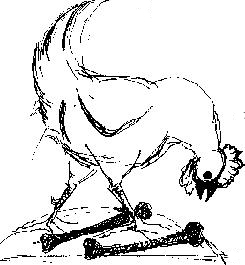
Aug. 2008: “A chicken that keeps scratching the dung-hill will soon find the mother’s thigh bones.” Ewe (Ghana, Benin, Nigeria and Togo) Proverb

Koklo ka koli dzi, eno fe atafu nue wokena do. (Ewe)
Un poussin qui fouille trop les tas des déchets (d’une poubelle) finit par rencontrer les os de sa mère. (French)
Kifaranga kichokoracho mlima (lundo) wa uchafu hukutana na mifupa ya mamae. (Swahili)
A chicken that keeps scratching the dung-hill will soon find the mother’s thigh bones. (English)

Ewe (Ghana, Benin, Nigeria and Togo) Proverb


Background, Explanation, Meaning and Everyday Use

There are very few Ewe proverbs that deal specifically with the concept of reconciliation and peace. However this Ewe proverb alludes to the context or environment necessary for reconciliation and peace. Chickens are fond of scratching the dung hill for food. This heap of garbage contains all kinds of things including chicken bones. A chicken that keeps digging deep into the dunghill sometimes comes across old bones and particularly chicken bones that may be more common in the garbage. This alludes to the fact that a person who keeps following bad issues may end up finding some painful reminders of their own destiny. The thigh bone of the mother hen is a reminder of the painful destiny of a person who keeps following bad issues from the past. Sometimes it is better to leave certain painful things to the past and look for better things in the future. One moral lesson is that if you want peace avoid digging too much into the bad and painful incidences of the past; they may only bring tears and sorrow. While selective understanding of past mistakes regarding war, conflict and division can be a learning experience, it is unhealthy to dwell too much on the past.


Biblical Parallels


“But Lot’s wife, behind him, looked back, and she became a pillar of salt” (Genesis 19:26).

“But Jesus said to him, ‘Follow me, and let the dead bury their own dead'” (Matthew 8:22).


Contemporary Use and Religious Application


This Ewe proverb can apply to many situations in different countries today where conflicts seem to have a never-ending momentum, for example, in Kenya after the December, 2007 presidential elections in which the confusion in announcing the results led to chaos, death and the destruction of a lot of property in some parts of the country. It is now debated whether there should be a blanket amnesty to all the people involved or whether these people should be prosecuted and punished. Those who are insisting on prosecution and punishment may have the assumption that their opponents may be the victims. Paradoxically like the proverbial chicken if they keep scratching the dunghill of this issue too much they may become victims of it themselves. Some issues are just too painful to be mentioned repeatedly. Revisiting them may only bring sorrow and tears. Sometimes it is better to leave these issues in the past. Learn lessons from them, yes, but then move on into the future.


NOTE: This proverb is No. 40 in a forthcoming booklet Collection of 100 Ewe Proverbs.


Professor Cephas Yao Agbemenu
Department of Fine Arts
Kenyatta University
P.O. Box 43844
Nairobi, Kenya
Cellphone: 254-723-307-992
Email: cyagbemenu@yahoo.com

situs toto

Categories
2008 African Proverbs of the Month

Jul. 2008: “A child of the kwale bird learns how to fly.” – Tonga (Zambia, Malawi, Zimbabwe) Proverb

Les poussins apprenant à voler, voleront et y percheront. (French)
Nestling, learn how to fly. Perch. Your companion birds have perched. (Literal EnglishTranslation)
A child of the kwale bird learns how to fly. (Figurative English Translation)


Tonga (Zambia, Malawi, Zimbabwe) Proverb

Background, Explanation, Meaning and Everyday Use

The kwale bird hatches its nestling on the ground. This takes place normally during the rainy season. Because they can perch the parents of the nestling always searches for food for it. Since the nestling cannot perch it is always stationed at the nest and waits for food from its parents. Hence the nestling is dependant on its parents until it starts to perch. This is why the parents urge it’s young one to perch so that it can find its own food and thus ensure its own future.

The meaning of this Tonga proverb is that you need to learn to work for your own future self reliance and sustainability. This proverb is used to encourage the youth to work for their own living. It is used to encourage lazy children who always sit at home and never bother to go and work in the fields or never look for employment.

It is now difficult to have everything in one village or one area. One has to go out to get the needs of the family. It is in going out that an individual prepares for his or her future. Therefore our future is taken care of by our present actions. Hence education and learning are very important for any person so that the future can be assured.

Biblical Parallels

1 Corinthians 3: 8: “Each one will receive wages in proportion to his or her labour.”

Philippians 4: 11: “For I have learned in whatever situation I find myself to be self-sufficient.”

1 Thessalonians 4: 11: “Nevertheless we urge you, brothers and sisters, to progress even more, to aspire to live a tranquil life, to mind your own affairs and to work with your own hands, as we instructed you, that you may conduct yourselves properly towards outsiders and not depend on anyone.”

Ephesians 4: 28: “The thief must no longer steal, but rather labour, doing honest work with his or her own hands, so that he or she may have something to share with one in need.”

Sirach 7: 15: “Hate not laborious tasks, nor farming, which was ordained by the most High.”

Genesis 2: 15: “The Lord God then took the human being and settled him in the Garden of Eden to cultivate and care for it.”

Contemporary Use and Religious Application

Zambian society is changing at a fast rate. It is becoming a consumer society and basic needs are becoming difficult to get. There is a great demand for all members of the family to contribute. Nuclear families are preferred and even couples are encouraged to be in either formal or informal employment. This contributes to the self-reliance of the families and also the preparation of the children. Independence is becoming important for families and it reduces the burden on other families. There are also a number of children who are orphaned due to various diseases. This Zambian proverb encourages these children to take up different activities so that they can improve their lives. The Catholic Church in Zambia has depended on expatriate missionaries for a long time. It is now time for the church to prepare itself and work for the self-reliance and sustainability of itself. The church needs to work both in human and financial resources to make itself self reliant.


Bboloka Bubala Nchimunya, S.J.
Hekima College
P.O. Box 21215
00505 Adams Arcade
Nairobi, Kenya
Cellphone: 254-733-926711
Email: bboloka@yahoo.fr

situs toto

Categories
2008 African Proverbs of the Month

Jun. 2008: “Great fires erupt from tiny sparks.” – Arabic (Libya) Proverb

Akbar na:r min asgar shara:r (Arabic)
Le grand feu debute par le premier étincele. (French)
Great fires erupt from tiny sparks. (English)

Arabic (Libya) Proverb

Background, Explanation, Meaning and Everyday Use

In Libyan society, especially in the Sebha Region where I have worked, this Arabic proverb is used to comment on how tiny acts of hastiness and evil erupt into big problems causing unnecessary rifts and big fights.

It is well-known from our common experience that fire accidents in our households as well as wild fires in forests start from tiny sparks that turn into huge fires. This is a natural practice generated by the nature of fire and materials that are inflammable. When two parts of dry branches rub against each other in the forest and produce tiny sparks of fire, the forest winds fan the fire further. The fire spreads and consumes the surrounding dry wood and becomes bigger. In the process the surrounding area also gets heated up and other inflammable materials around that fire also catch fire and so the fire gradually becomes bigger and bigger. In a similar way, when dry grass in wild bushes burns up, it will spread wildly over huge areas of grassland killing flora and fauna. Here the tiny spark is the tiny cause and the great fire is the huge effect.

A similar practice is also observed in our social life. For example, when two headstrong or quarrelsome people come together and one of them does something wrong – be it an insult or an aggressive gesture however small it may be — it will produce an opposite reaction from the other person. Here their tendency for harming others (by insult or hurt) is the tiny cause. Since both of them are dry with bad tendencies like the dry wood or grass ready to burn, they pick a quarrel spontaneously and the quarrel turns into a bigger quarrel when their friends also join the fray and the context of their arguments fans the fire of the dispute.

This proverb is in Libyan Spoken Arabic (also called Libyan Vernacular Arabic)and inStandard Arabic that is the national or official language of Libya.

Biblical Parallels

“So also the tongue is a small member, yet it boasts of great exploits. How great a

forest is set ablaze by a small fire! And the tongue is a fire. The tongue is placed among our members as a world of iniquity; it stains the whole body, sets on fire the cycle of nature, and is itself set on fire by hell” (James 3:5-6). The context in which this Libyan proverb is used is with reference to the evil power of the tongue. Words of indiscretion have led to great problems as shown in the lives of many Biblical characters and different Biblical texts:

“Death and life are in the power of the tongue: and they that love it shall eat the fruit thereof “ (Proverbs 18:21)

He who guards his mouth preserves his life, but he who opens wide his lips shall have destruction” (Proverbs 13:3).

He who has a wayward and a crooked mind finds no good, and he who has a willful and contrary tongue will fall into calamity” (Proverbs 17:20).

God in His infinite wisdom created us and gave us different body parts for different

kinds of functions. The best thing about it is that He gave us control over these parts. Your leg can not move without your will, neither can your tongue speak without your will. That is why the Bible teaches us to tame our tongue. I wondered why God says tame the tongue and not any other part of the body, until I came across this Scripture which gave me a deeper understanding of the potential locked within the tongue:

When I talk about the tongue I mean its main function that is to speak and release words. Words are very powerful; they are containers of positive or negative power. Power for building or destroying, for creating light or darkness, for releasing life or death, for causing hope or despair, for healing or for hurting, for blessing or for cursing. You can use your tongue as a building tool to build your life and the lives of other people around you, or to completely destroy. Remember, you are always in control of you tongue. An untamed tongue is the spark that sets an entire forest on fire. It is easy to judge if your tongue is tamed or not by listening to the words that proceed from your mouth. Are they words of gossip which destroy the foundation of trust? Are they negative words which birth unbelief and discontent? Are they unkind words loaded with fear and intimidation?

Did you know that you are a prophet of your own destiny? There are many ways of telling if someone is heading for success or failure, such as their character, values, priorities or convictions. But above all things a person’s words will reveal to us who he or she is. We know the character of God through reading His Word. That is how we know His likes and dislikes.

Contemporary Use and Religious Application

Proverbs of this type are generally used in a negative sense in many languages since fire denotes something bad, destructive. Just as the tiniest spark can cause a forest fire, the wicked use of the tongue can cause great harm. In the Bible the reference is to its negative use such as in James 5 and 6. In Libyan Arabic this proverb can be used both positively and negatively. Probably the positive sense is a recent development that has to be further confirmed.

This proverb captures an interesting process of small causes producing great effects and has a serious implication for ordering our lives. It is so because the same type of natural practice can also be observed in our social practices. Our disposition is the root cause of all our activity – be it mental, vocal, or physical. And if you do good, you beget good; if you do evil, you beget evil. Human beings, by nature, are sensitive to censure but at the same time, they are also inclined towards censure of others, as we commonly observe in gossiping. In addition, as they are sensitive to censure, they always have the tendency to react to any censorious activity by condemning the opponent and thus set in a chain reaction of abuse and counter abuse resulting in big quarrels and even violence depending upon the individuals’ nature.

Let us take a simple example to illustrate how tiny mistakes in behavior cause great problems. A person driving on the main road was in a mindless hurry and wanted to pass through the crossroads ignoring the traffic jam. He nearly hit another person’s car and the latter objected to the former’s rash driving. However, instead of apologizing, the rash driver retorted angrily. Consequently, the other driver’s sentiments were hurt and he equally reacted angrily by abusing the rash driver. Their friends passing by also joined them and inflamed the situation like the adjoining dry grass or dry wood in a forest. Word upon word piled up and erupted into a big quarrel and both the people hit each other and the wind screen of the first person’s car was smashed in the process. Thank God a policeman came to the rescue. Had the rash driver apologized to the other, this quarrel might have been avoided; had his friends tried to mitigate the problem, the quarrel would have been stopped before it got out of hand; and had they not allowed the arguments to pile up, the situation would have been controlled and the quarrel stopped. But none of them took place and hence a tiny spark erupted into a big fire.

In our daily life we see some people gossiping about others and land themselves into unnecessary problems that burn up their personal happiness, time, and energy. Not only their happiness, but also the other people’s happiness is spoiled by such evil talk.

This proverb should be used appropriately to drive home the point that unnecessary physical, or mental or vocal acts of evil, even though they are very insignificant and small, should be avoided at all costs. Especially, words should be used very, very carefully since their effect is longstanding. A bad word leads to another bad word and both of them lead the users to the hospital! Even if the other person is wrong, it is better to be patient and remember what Christ said, “Father, forgive them for they know not what they do!” and “If anyone strikes you on the right cheek, turn the other also” (Matthew 5:39).

This negative proverb has a positive side to it: Just as one bad act leads to another, one kind act also leads to another. In our daily life we notice how small emotions generate great revolutions both at the personal level and the collective level. Since charity begins at home, the personal level should be given the greatest importance. Incidentally what is achieved at the personal level gets elevated to the collective level as each one joins together to form the group.

As one’s disposition impels a desire, this desire leads to an effort producing an act by the actor. If the disposition or character is good, good acts are produced; and if the disposition is bad, bad acts are produced. Consequently, the results also will be good or bad. Therefore, deliberately think of good things only.

NOTE: This Libyan proverb is taken from From Sebha with Love: A Collection of Libyan Proverbs by Chilukuri Bhuvaneswar.

Professor Chilukuri Bhuvaneswar
University of Sebha
Sebha, Libya

and

CIEFL
Hyderabad, India
Email: bhuvaneswarc@yahoo.co.in

situs toto

Categories
2008 African Proverbs of the Month

May 2008: “A tree is known by its fruit. ” – Zulu (South Africa, Swaziland) Proverb

Isihlahla saziwa ngezithelo zaso. (Zulu).
A tree is known by its fruit. (English)

Zulu (South Africa, Swaziland) Proverb

Background, Explanation, Meaning and Everyday Use

The meaning is that a person’s success is shown by his or her deeds. A person can talk, and talk convincingly. He or she may be an orator, or a bragger, and those listening to the person may believe him or her for a while. But, if there are no deeds to go with that talking, he or she may as well have kept quiet. One’s story will be validated only by one’s deeds. Some people are good at talking, but what they have done or are doing is the real proof. This Zulu proverb emphasizes that a person is successful because of actions, not words.

Biblical Parallels

Jesus says in Matthew 7:15 and following, “Beware of false prophets who come to you in sheep’s clothing but inwardly they are ravening wolves. You shall know them by their fruit. Even so every good tree brings forth good fruit; but a corrupt tree brings forth evil fruit…Wherefore by their fruits you shall know them.”

Jesus demonstrated what He was saying by actions. “Jesus said unto her, ‘I am the resurrection and the life. He that believes in me, though he were dead, yet shall he live.'” (John 11:25). Jesus said: “I am the bread of life….”(John 6:35) and he fed the five thousand. It was natural, it was easy to believe Him because He did not just talk the talk. He walked the walk. He illustrated his words by actions.

Contemporary Use and Religious Application

People can tell that this is a banana tree, or a peach tree, or an orange tree, by the fruit the tree produces. You can try to tell people that this banana tree is an orange tree all you want, but the fruit will tell the truth. So it is with us. You can claim you love the people all day long, but if you do not show it by being there for them, physically, emotionally, monetarily, or otherwise, then guess what? You do not. Your words mean nothing. Your deeds make the difference!

This Zulu Proverb can be applied to leadership in Africa today. We need leaders who walk the walk, and not just talk the talk. In many countries of Africa where reconciliation, peace and justice are so badly needed, we will know the best leaders by their fruits.

NOTE: This is part of a collection of 540 Zulu Proverbs.

Mrs. Jani Carter (uMaMhlongo)
828 Mechanic Street
Emporia, KS 66801 USA
Email: janal40@cableone.net

situs toto

Categories
2008 African Proverbs of the Month

Apr. 2008: “The water pot presses upon the small circular pad.” – Acholi (Uganda) Proverb

Agulu pii odiyo otac. (Acholi)

Jungu la maji hukandamiza kata. (Swahili)
The water pot presses upon the small circular pad. (English)

Acholi (Uganda) Proverb

Background, Explanation, Meaning and Everyday Use

The Acholi people live mainly in Northern Uganda. The otac is the small circular pad used as a stand and also for carrying water pots on the head. Unless the pot is lifted the pad cannot be removed. The Acholi proverb refers to the position of an individual who is forced by authority or public opinion to do or to refrain from doing certain acts against his or her will. The proverb presupposes the wisdom of a practical existential option for an action that promotes the good of the community.


Biblical Parallels

“So Pilate, wishing to satisfy the crowd, released Barabbas for them; and after flogging Jesus, he handed him over to be crucified” (Mark 15:15).

“Could anyone refuse the water of baptism to these people, now they have received the Holy Spirit just as we have?” (Acts 10:47). In the context of this Scripture passage Peter (as well as the other Jews present) were surprised that the Holy Spirit had come down on the Gentile believers as well. They were to recognize their Gentile colleagues as their brothers and sisters in Christ. Thus the Gentiles were admitted to Baptism even though the Jewish tradition would not have allowed this.

NOTE: Today tribalism and ethnicity are one of the main causes of oppression, violence and wars in Africa. As Christians the foundation of our identity is first and foremost in Christ through Baptism. All other elements of our identity come after that.

Contemporary Use and Religious Application

This Acholi proverb can be applied to the call for reconciliation and peace in Kenya against the background of the violence that immediately followed the December, 2007 General Election. The voice of the suffering Kenyan people is like the agulu pii pressing on the optic — the political leaders who are expected to come up with practical solutions to bring about reconciliation and peace among the people even if the wishes of the individual political leaders may not be realized.

This also reinforces the theme of the just completed 2008 Kenya Lenten Campaign: “With a New Heart and New Spirit” (Ezekiel 36:26). Unless we accept the Risen Lord to renew us, the much desired call for reconciliation and peace may not bear fruit in our lives.

Rev. Thomas Komakech, AJ.
General Council – Apostles of Jesus
P.O. Box 24946, Karen,
00502 Nairobi, Kenya

Email: frthomask@yahoo.com


situs toto

Categories
2008 African Proverbs of the Month

Jan. 2008: “I have been bitten by a tsetse fly.” – Sukuma (Tanzania) Proverb

Nalung’wa naba. (Sukuma)
Nimeumwa na mbung’o. (Swahili)
I have been bitten by a tsetse fly. (English)
Sukuma (Tanzania) Proverb

Background, Explanation, Meaning and Everyday Use

This humorous Sukuma proverb in Tanzania refers to a person who relentlessly pesters another person until he or she pays off a debt. There is a similar Sukuma proverb that says To promise an eye to a blind person meaning that the blind person will pester you until you fulfill your promise.

The proverb also refers to a person who, like a tsetse fly, persistently and relentlessly keeps coming after you again and again until he or she gets what the person wants.

In Swahili there are three words for a tsetse fly: mbung’o, ndorobo, and chafuo. Usage varies from place to place. The most commonly used word is mbung’o.

Biblical Parallels

Luke 18:1-8: “Parable of the Unscrupulous Judge and the Poor Widow.”

Luke 11:5-13: “Episode on the Importance of Persistence in Prayer.”

Luke 15:11-32: “Parable of the Prodigal Son.” The father goes out every day to await the return of his lost son without getting tired or discouraged.

Judges 16: 4-22: “Story of Samson and Delilah.” Delilah pestered her husband until Samson told her the source of his great strength.

Contemporary Use and Religious Application

God is persistent in following us and challenging us. See the dramatic poem The Hound of Heaven by Francis Thompson.

From those strong Feet that followed, followed after.
But with unhurrying chase,
And unperturbèd pace,
Deliberate speed, majestic instancy,
They beat — and a voice beat
More instant than the Feet.

In turn we should be persistent in prayer. Jesus Christ says: “Ask, and it will be given you; search, and you will find; knock, and the door will be opened for you. For everyone who asks receives, and everyone who searches finds, and for everyone who knocks, the door will be opened. Is there anyone among you who, if your child asks for bread, will give a stone? Or if the child asks for a fish, will give a snake? If you then, who are evil, know how to give good gifts to your children, how much more will your Father in heaven give good things to those who ask him (Matthew 7:7-11). And similarly Luke 11:13: “If you then, who are evil, know how to give good gifts to your children, how much more will the heavenly Father give the Holy Spirit to those who ask him!”

We should not get discouraged and despair in times of difficulties. Whether it is war, poverty, sickness, disease, trials, failures, mistakes, weaknesses, limitations, misunderstandings, etc. we should persevere, we should endure, we should be persistent. And in the spirit of St. Paul: “Let us not grow weary in doing what is right, for we will reap at harvest time, if we do not give up” (Galatians 6:9).

NOTE: This proverb was used to describe my assistants/helpers in researching and writing the definitive version of the famous Sukuma myth of the clever young man Masala Kulangwa and the monster Shing’weng’we. It was published by Mathews Bookstore in Dar es Salaam, Tanzania in December, 2006 in booklets of 32 pages each in three separate languages:

English: Tears of Joy: African Story about Heroes and Monsters
Swahili: Machozi ya Furaha: Hadithi ya Mashujaa na Majitu
Sukuma: Shisoji ja Buyegi: Jigano ja Lishing’weng’we

Rev. Donald Sybertz, M.M.
Ndoleleji Parish
P.O. Box 47
Shinyanga, Tanzania

situs toto