
 |
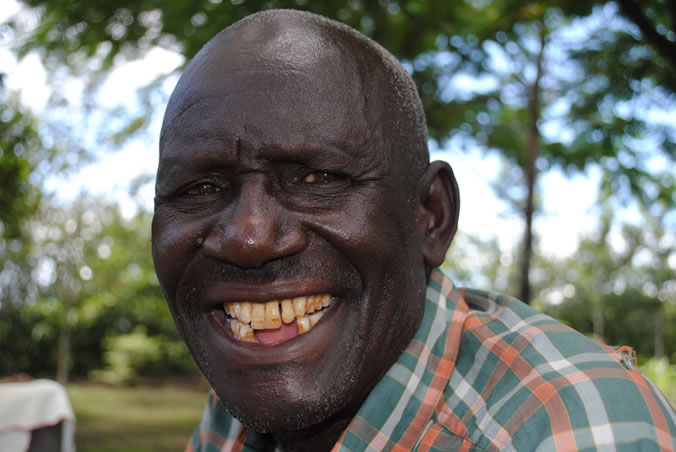
Aghara mwino,tighaira mwino,agharaelino ghaira ilibu. (Soga) Palipo ng’olewa jino hubaki na pengo. (Swahili) La où une dent est extraite, reste un vide. (French) Where a tooth is removed there remains a gap. (English) |
Soga (Uganda) Proverb
Background, Meaning and Everyday Use
History relates the origin of the Basoga to that of the Bantu speakers who entered Uganda from northern Katanga (the current Democratic Republic of the Congo). Between 1250 and 1750, the Basoga migration and settlement in their present location is associated with two cultural heroes: Kintu (the Thing) and Mukama (the Milker), also regarded as the provider of all things). Migrations around the Lake Victoria area are associated with Kintu, who originated from the Mount Elgon area in the east. He traveled through southern Busoga where he founded states and later moved to the neighboring state of Buganda to the west. With the arrival of the Luo immigrants between 1550 and 1700 in parts of northern and eastern Uganda, the Basoga were influenced by the Luo rulers of Bunyoro and followed some of their customs and culture.
To become closer as a community and co-exist peacefully with their neighbors, the Basoga strengthened their relationships through inter-clan marriages. Cultural relationships were also forged through the indigenous religious institutions that brought the Basoga together to worship. They would meet at the religious shrines built for the founding figures Kintu and Mukama.
Dental ritual extractions and decorations were, and still are, practiced among many African ethnic groups. Sometimes it was mainly for religious rituals purposes, for esthetic reasons, beauty, as a symbol of status or of belonging to a particular social group. For example, at puberty the Basoga would extract the sixth tooth in the lower jaw as a symbol of initiation into adulthood like the Luo of western Kenya. When one was sick, especially when they could not open their mouth or teeth locked, the gap would allow the person to be fed. It was also used to identify a corpse to know that the person belonged to their ethnic group.
This proverb was created and used to remind the community that they had a common solution to various problems which affected everyone. The common sign of the gap in the teeth structure constantly reminded them to identify as belonging together. They all received equal treatment and opportunity.
Biblical Parallels
Psalm 133:1: “Behold, how good and how pleasant it is for brothers and sisters to dwell together in unity.”
Ephesians 4:13 “Till we all come in the unity of the faith and, of the knowledge of the son of God, unto a perfect man, unto the measures of the stature of the fullness of Christ.”
Contemporary Use and Religious Application
The community today is diverse, with people from all walks of life and cultures. Communities that were once fairly homogeneous are experiencing large influxes of newcomers from different racial, ethnic, and cultural backgrounds. In the present time, the Christian Churches acts as the common bridge to cohesion of the community, giving equal opportunity to all. When there is a problem, whether spiritual, political, social or economic, the church stands in to support the community and provides solutions.
This proverb teaches about endurance, patience, belonging and recognition. We can compare the pain of tooth extraction to the physical and emotional pain we suffer at times, but we overcome in due cause. There are many challenges in our daily lives which create gaps in the flow of life, but endurance paves way for positive changes and better opportunities. Patience with those around us builds bonds that last and creates cohesion among even the most diverse people, making them to belong together and recognize themselves as part of the same community and family.
There is an African saying that states a lone buffalo is an easy hunt for a lion or a hunter.” It teaches that united is safer and stronger than alone.
NOTE: This proverb is No. 35 in the booklet A Collection of 100 Soga Proverbs (Uganda) published by Alimas Kaluta in collaboration with the African Proverbs Working Group, Nairobi, Kenya.
Alimas Kaluta
Nairobi, Kenya
Cell phone +254715576517
Email: alimasikaluta@gmail.com
Photographs provided by:
Cephas Yao Agbemenu
Department of Fine Art and Design
Kenyatta University
P.O. Box 43844
Nairobi, Kenya
Cell phone: +254 723-307992
Email: cyagbemenu@yahoo.com